A re you ready to learn some words related to PEACE AND COHABITATION?
CHOOSE ONE OF IT AND SHARE IT ON A WORD CLOUD
3ºAyB
.png)
3ºCyD
:quality(75)/arc-anglerfish-arc2-prod-elcomercio.s3.amazonaws.com/public/OCLAEN47UJBJTKBRXUQP24VJ2Y.jpg)
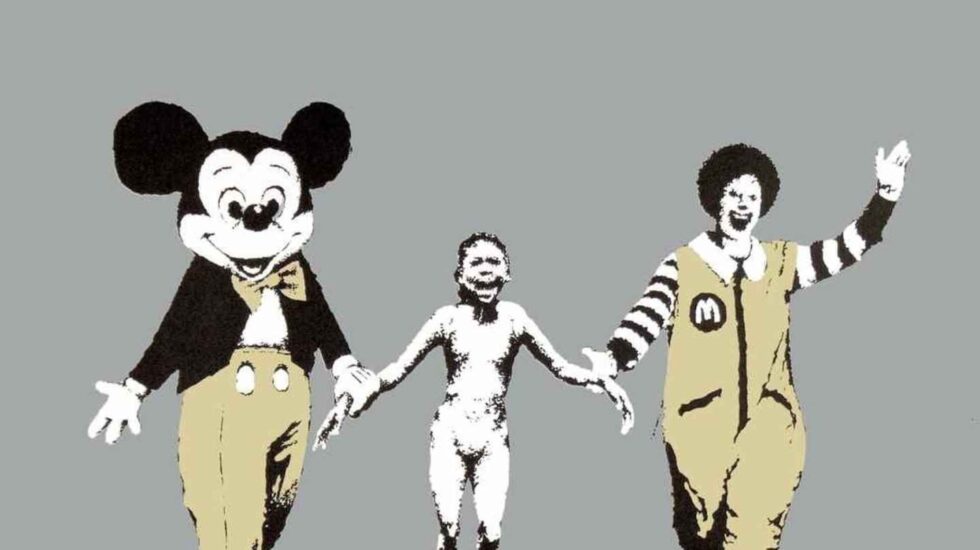
Te atreves a verlo en ingés??
COMO YA VES, LA FORMA TIENE UNA CARGA EXPRESIVA INCREIBLE, Y MUY VERSÁTIL EN SU USO. ES UNO DE LOS ELEMENTOS MÁS IMPORTANTES EN LA EXPRESIÓN PLÁSTICA. VEAMOS LAS FORMAS POLIGONALES EN EL ARTE
Y POR ÚLTIMO, VAMOS A ESTUDIAR UN POCO MÁS A FONDO EL CUBISMO COMO MOVIMIENTO
ARTÍSTICO CARACTERÍSTICO DE LA FORMA.

¿TE IMAGINAS UN MUNDO DONDE LAS PERSONAS CARECIERAN DE ORGANOS DE LA VISIÓN? ¿O QUE SIEMPRE FUERA DE NOCHE? ¿SABES LO QUE ES LA ACROMATOPSIA Y DALTONISMO?
¿sabes que hay personas dicrómatas, tricromátras o tetracómatras? ¿tu que eres?
en este enlace tienes un vídeo muy interesante del programa "Desafía tu mente", como está el programa entero y solo nos interesa del minuto 7:50 y hasta 10:30 (aunque es muy interesante completo), te dejo el fragmento más abajo.
En este tema aprenderemos como se produce el fenómeno de la difracción de la luz, ¿sabes que esa es la base científica del fenómeno del arco iris? alucinante, verdad? y la diferencia entre el color luz y el color pigmento? En esta unidad aprenderemos a clasificar los colores y sus cualidades expresivas para poder sacar lo máximo de este elemento del lenguaje visual.
¿Cuanto recuerdo de ayer? Juguemos a Kahoot
Es tu turno, vamos a repasar, te dejo un vídeo de edpuzzle que deberás ver en casa y contestar las preguntas.
EL ARTE DE LA LÍNEA ONDULANTE
An ornamental style of art that flourished between about 1890 and 1910 throughout Europe and the United States, art nouveau is characterized by its use of a long, sinuous line. The style was employed most often in architecture, interior design, jewelry and glass design, posters, and illustration. It was a deliberate attempt to create a new style, free of the imitative historicism that dominated much of 19th-century art and design. Art nouveau developed first in England and soon spread to the European continent, where it was called Jugendstil in Germany, Sezessionstil in Austria, Stile Floreale (or Stile Liberty) in Italy, and Modernismo (or Modernista) in Spain. The term art nouveau was coined by a gallery in Paris that exhibited much of this work.
In England the style’s immediate precursors were the aestheticism of the illustrator Aubrey Beardsley, who depended heavily on the expressive quality of organic line, and the Arts and Crafts Movement of William Morris, who established the importance of a vital style in the applied arts. On the European continent, art nouveau was also influenced by experiments with expressive line by the painters Paul Gauguin and Henri de Toulouse-Lautrec. The movement was also partly inspired by a vogue for the linear patterns of Japanese prints.
The distinguishing ornamental characteristic of art nouveau is its undulating, asymmetrical line, often taking the form of flower stalks and buds, vine tendrils, insect wings, and other delicate and sinuous natural objects. In the graphic arts the line dominates all other pictorial elements—form, texture, space, and color—to its own decorative effect. In architecture and the other plastic arts, the whole of the three-dimensional form becomes engulfed in the organic, linear rhythm, creating a fusion between structure and ornament. Architecture particularly shows this synthesis of ornament and structure; a liberal combination of materials—ironwork, glass, ceramic, and brickwork—was employed, for example, in the creation of unified interiors in which columns and beams became thick vines with spreading tendrils and windows became both openings for light and air and membranous outgrowths of the organic whole. This approach was directly opposed to the traditional architectural values of reason and clarity of structure.
There were many artists and designers who worked in the art nouveau style. Some of the more prominent were the Scottish architect and designer Charles Rennie Mackintosh, who specialized in a predominantly geometric line and particularly influenced the Austrian Sezessionstil. The extremely sinuous and delicate structures used by Belgian architects Henry van de Velde and Victor Horta influenced the French architect Hector Guimard. Other prominent designers who worked with the style included American glassmaker Louis Comfort Tiffany; French furniture and ironwork designer Louis Majorelle; Czechoslovakian graphic designer-artist Alphonse Mucha; French glass and jewelry designer René Lalique; American architect Louis Sullivan, who used plantlike art nouveau ironwork to decorate his traditionally structured buildings; and the Catalan architect and sculptor Antoni Gaudí, perhaps the most original artist of the movement, who went beyond dependence on line to transform buildings into curving, bulbous, brightly colored, organic constructions.
After 1910 art nouveau appeared old-fashioned and limited and was generally abandoned as a distinct decorative style. It was important, however, in moving toward the 20th-century aesthetic of unity of design.
https://kids.britannica.com/students/article/art-nouveau/316595
Art Nouveau is an international art movement and style based on organic forms. It was seen in modern art, graphic design, architecture and applied arts such as decoration, jewellery, ceramics and glass.p7 It peaked in popularity at the fin de siècle of the late 19th century (1890–1905), and continued until the First World War.
A reaction to academic art of the 19th century, Art Nouveau is organic in style. It has floral and plant-inspired motifs, and stylized, flowing curvilinear forms.p3-36 Art Nouveau is an approach to design according to which artists should work on everything from architecture to furniture, making art part of everyday life.
The movement was strongly influenced by Czech artist Alphonse Mucha. Mucha produced a lithographed poster as an advertisement for the play Gismonda by Victorien Sardou, starring Sarah Bernhardt. The poster appeared on 1 January 1895 in the streets of Paris. It was an overnight sensation, and announced the new artistic style and its creator to the citizens of Paris. Initially called the Style Mucha, this soon became known as Art Nouveau.
Art Nouveau's fifteen-year life was most strongly felt throughout Europe—from Glasgow to Moscow to Madrid—but its influence was global. In France, Hector Guimard's Paris Metro entrances shaped the landscape of Paris and Emile Gallé was at the center of the school of thought in Nancy. Victor Horta had a decisive impact on architecture in Belgium.p37
Magazines like Jugend helped spread the style in Germany, especially as a graphic design form, while the Vienna Secessionists influenced art and architecture throughout Austria-Hungary. Art Nouveau was also a movement of distinct individuals such as Gustav Klimt, Charles Rennie Mackintosh, Alphonse Mucha, René Lalique, Antoni Gaudí and Louis Comfort Tiffany, each of whom interpreted it in their own individual manner.p34
Although Art Nouveau fell out of favour with the arrival of 20th-century modernist styles, it is seen today as an important bridge between Neoclassicism and modernism.
Art Nouveau monuments are now recognized by UNESCO on their World Heritage Sites list as significant contributions to cultural heritage. The historic center of Riga, Latvia, with "the finest collection of art nouveau buildings in Europe", was inscribed on the list in 1997 in part because of the "quality and the quantity of its Art Nouveau/Jugendstil architecture". Four Brussels town houses by Victor Horta were included in 2000 as "works of human creative genius" that are "outstanding examples of Art Nouveau architecture brilliantly illustrating the transition from the 19th to the 20th century in art, thought, and society".
https://kids.kiddle.co/Art_Nouveau


